

Choosing between a VPN and a proxy depends on understanding their roles in your online privacy. Although both hide your IP address, the difference becomes clear once you consider how thoroughly they protect your data.
Many users explore proxy vs VPN options to improve streaming access, enhance browsing security, or boost overall anonymity.
If you’ve ever compared a proxy server to a VPN or wondered if a proxy is faster than a VPN, this guide simplifies the confusion. By the end, you’ll understand when each tool is appropriate and how to select the best proxy and VPN setup for your desired results.
So, let’s explore more on Proxy vs VPN in detail.
Source: What Is My IP Address
Proxy vs VPN: At a Glance
Here’s a glimpse of the main differences between Proxy and VPN.
| Factor | Proxy | VPN |
| Purpose | Hides IP address | Secures data and anonymity |
| Security | Limited (HTTP proxies) | Strong encryption |
| Anonymity | Partial | High |
| Encryption | No | Yes |
| Speed | Faster | Slower (due to encryption) |
| Location Variety | Limited | Wide choice of servers |
| Device Compatibility | Most devices and apps | Most devices and apps |
| Use Cases | Basic web browsing | Privacy, online security |
| Streaming & Torrenting | Often not suitable | Suitable for both |
So, we can see from the table data that proxy and VPNs have significant differences.
What Is a Proxy? (Meaning, How It Works, Use Cases)
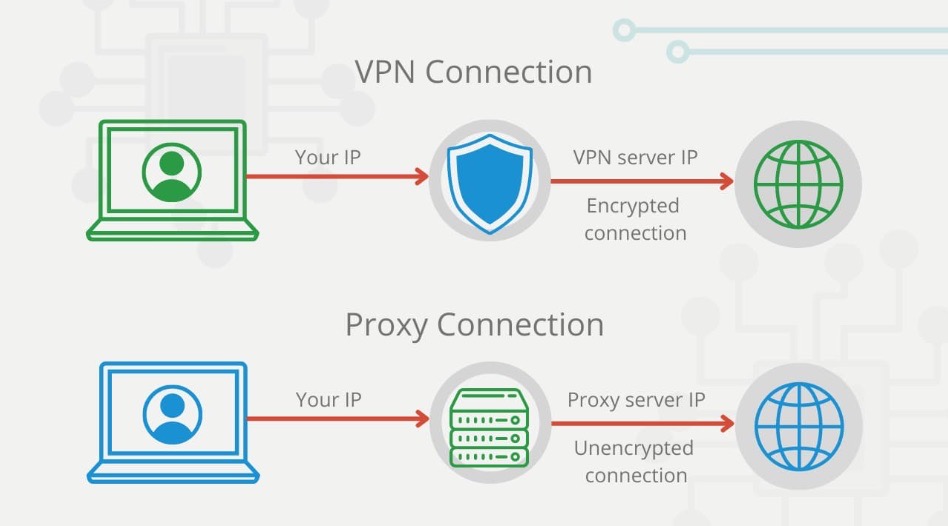
A proxy is a middle server that sits between your device and the website you’re visiting. When you connect through a proxy, the site sees the proxy’s IP address instead of yours.
This creates a basic layer of anonymity and helps you hide your location. Many users compare proxy vs VPN tools when looking for online privacy, although a proxy focuses more on IP masking and less on security.
A proxy handles only a select amount of traffic, typically from your browser or a specific application. It does not protect your entire device, and it does not encrypt your network connection.
How a Proxy Works?
A proxy operates by routing your requests through its own server. When you type a website address, the proxy forwards that request, retrieves the content, and sends it back to you. This creates an indirect connection that hides your personal IP information but leaves your data exposed because there is no encryption happening.
Proxies are often considered lightweight and suitable for simple tasks. Compared to a VPN, which offers full-device protection and encrypted tunnels, a proxy provides limited security.
Because proxies do not encrypt traffic, some users feel that a proxy is faster than VPN services. While this can be true for simple browsing, it sacrifices privacy, stability, and protection.
Use Cases of a Proxy
- Proxies are perfect for quick IP changes, lightweight privacy, or switching regions. They enable access to restricted websites, test geo-targeted content, or manage multiple accounts.
- Marketers, developers, and analysts often use proxies for web scraping or data collection when working with publicly available information.
- For casual browsing, a proxy offers convenience, but not the security needed for sensitive tasks.
What Is a VPN? (Meaning, How It Works, Key Features)
A VPN is a secure tool that protects your internet traffic by creating a private, encrypted path between your device and the websites or apps you use. This encrypted connection hides your real IP address and replaces it with the VPN server’s IP.
When people compare proxy vs VPN services, this level of privacy becomes the biggest difference. The core service of a VPN revolves around privacy, security, and unrestricted online access. This is why many users prefer a VPN when handling sensitive information.
How a VPN Works?
A VPN creates a secure tunnel between your device and a remote server. All of your data travels through that tunnel, which hides your identity and encrypts the information.
This prevents internet service providers, public Wi-Fi operators, and hackers from watching your activity. When comparing a proxy server vs VPN, this encryption is what sets VPNs apart.
Your traffic is routed through a VPN protocol, such as WireGuard, OpenVPN, or IKEv2. These protocols are responsible for stability, protection, and speed. Some people wonder if a proxy is faster than VPN connections.
In simple browsing scenarios, a proxy might feel quicker because it skips encryption, although a VPN offers both privacy and optimized speeds when using the right protocol.
Key Features of a VPN
- The most important features of VPN are strong encryption, private IP masking, and the ability to switch virtual locations. Encryption protects your data, while IP switching helps you access content that might not be available in your region.
- Many VPNs include kill switches, leak protection, and no-log policies. These features prevent accidental exposure and keep your activity private. A
- VPN also supports secure access to public Wi-Fi networks, which is something a proxy cannot do.
- VPNs also help with streaming, secure file sharing, and online banking. They reduce tracking, limit targeted ads, and provide a stable connection for remote work.
Proxy vs VPN: Core Differences Explained Simply
Many people compare proxy vs VPN services because both hide your IP address, but they work very differently and serve different purposes. The main difference between proxy and VPN tools comes from how they handle security, speed, and data protection.
Level of Security
- A proxy only reroutes specific traffic, usually from your browser or app. It hides your IP address but does not encrypt your data. Anyone monitoring the network can still see what you are doing.
- A VPN includes complete encryption across your whole device, which protects your browsing, online banking, messaging, and every other internet activity.
Data Encryption
- A proxy sends your traffic without encryption. This leaves your data exposed on public Wi-Fi and insecure networks.
- A VPN encrypts your entire connection and keeps your activity private. When reviewing proxy server vs VPN solutions, encryption is the biggest divider.
Scope of Protection
- A proxy applies its settings to a single app or browser window. If you open another program, that traffic remains unprotected.
- A VPN covers the entire device. This consistency creates a stable and secure environment, which is why users prefer VPN vs proxy server setups for everyday protection.
Speed and Performance
- Some people ask if a proxy is faster than VPN connections. A proxy may feel faster during simple browsing because it skips encryption, but the lack of security makes it unreliable for sensitive tasks.
- A modern VPN offers optimized servers and fast protocols such as WireGuard or IKEv2. These improvements reduce slowdowns and create a smoother experience for streaming and gaming.
Reliability for Streaming and Restricted Content
- Proxies often struggle with streaming platforms because many services block them.
- VPNs provide more stable access by routing your entire connection through trusted servers.
Privacy and Anonymity
- A proxy masks your IP address but does not prevent tracking. Your ISP can still view your activity, and advertisers can track your behavior.
- A VPN hides your IP, encrypts your traffic, and reduces tracking attempts across multiple services.
When to Use a Proxy (and When Not To)
A proxy can be helpful in certain situations, but it is not a complete security tool. Therefore, understanding when to use a proxy can help keep your online activity safe and efficient.
When to Use a Proxy?
1. For Quick IP Switching: A proxy is useful when you want to change your IP address without altering your entire connection.
2. Basic, Low-Risk Browsing: If you are reading blogs, checking non-personal sites, or accessing public information, a proxy can handle that traffic.
3. Geo-Testing and Content Previewing: Marketers and developers often use proxies to check how websites, ads, or search results look in different regions.
4. Managing Multiple Accounts: A proxy helps maintain separate IP identities across accounts. This is common in social media management, testing environments, and automation setups.
5. Web Scraping Public Data: When collecting non-sensitive, publicly available data, proxies help rotate IPs and reduce the chance of rate limits or temporary blocks.
When Not to Use a Proxy?
1. When Handling Sensitive Information: If you are logging into bank accounts, work portals, or anything private, do not use a proxy. Because it cannot encrypt and protect your connection.
2. On Public or Unsecured Wi-Fi: Public networks expose your traffic to snooping. A proxy cannot protect you in these situations. A VPN meaning full-device encryption, ensures your activity stays private.
3. For Streaming or High-Bandwidth Apps: Most major streaming platforms detect and block proxy traffic. Proxies can also slow down or drop connections.
4. When You Need Real Privacy: If privacy matters, the difference between proxy and VPN becomes significant because VPNs secure the entire connection.
5. For Torrenting or File Sharing: Proxies are not designed for P2P traffic. They expose your real IP and offer no encryption.
When to Use a VPN (and Why It’s Often Better)
The real strength of a VPN comes from its ability to encrypt your entire connection and keep your personal data protected at all times. Knowing when a VPN is necessary can help you stay safe, access more content, and maintain your digital privacy.
So, when should you use a VPN? Let’s find out.
Complete Online Privacy
A VPN hides your IP address and encrypts your traffic. This prevents your ISP, advertisers, and network operators from tracking your activity. When comparing VPNs vs. proxy tools, full-device protection becomes the most noticeable difference.
Using Public Wi-Fi
Cafés, airports, hotels, and shared networks expose your data to snooping. A proxy cannot protect you here, but a VPN, which provides full encryption, keeps your connection secure even on unsecured hotspots.
Streaming from Different Regions
A VPN provides more reliable access to geo-restricted platforms because it securely routes all traffic through remote servers. Proxies are often blocked, but VPN servers offer better stability and speed for streaming.
Working Remotely
If you manage company files, emails, or login credentials, you need a secure connection. A VPN encrypts sensitive work data and keeps your access protected from interception.
Torrenting or Sharing Files
P2P traffic exposes your IP to multiple peers on the network. A VPN masks that IP and encrypts the connection, making it much safer than relying on a proxy server or a VPN setup without encryption.
To Reduce Tracking
A VPN helps reduce digital tracking by hiding your IP address and preventing many data collection efforts. This makes your browsing experience more private and less cluttered.
For Stable, Encrypted Access Across All Apps
A proxy only works with specific applications. A VPN covers your entire device, which is why many users prefer VPN over proxy server protection for consistency and ease of use.
Why a VPN Is Often the Better Choice
A VPN delivers full encryption, secure IP masking, and stronger privacy. It safeguards every app and service on your device, something a proxy cannot do. When users compare proxy and VPN services, the VPN often stands out for its reliability, security, and performance across different online tasks.
Modern VPN protocols offer fast speeds, making the “Is proxy faster than VPN?” question far less relevant today. Many VPNs are optimized for streaming, gaming, and large downloads, closing the speed gap while still keeping your data protected.
If you need a reliable, always-on protection tool, a VPN is the best long-term choice. Many users still search for the best proxy and VPN combinations for specific needs, but when security is key, a VPN remains the superior option.
Best VPN Service at an Affordable Price
Looking for an affordable VPN? Symlex VPN is one of the most budget-friendly and dependable options available. Here’s why it ranks as the best VPN service at a reasonable price:
Key Features:
- AES-256 military-grade encryption for top-tier security
- Blazing-fast speeds with unlimited bandwidth from 1,000+ global servers in 100+ locations
- Strict no-logs policy to keep your online activity completely private
- Simultaneous connections on up to 5 devices
- Extra protections, including a kill switch, split tunneling, and built-in ad-blocking
- Ability to bypass censorship and geo-blocks for streaming, social platforms, and websites
- 24/7 customer support available across all plans
Pricing Plans:
- 1-Month Plan (5 devices): $7.99
- 6-Month Plan: $24.99
- 12-Month Plan (+2 months free): $39.99, which comes down to around $3.29 per month
- Lifetime Plan (5 devices): $450 one-time payment
Why It’s a Smart Pick:
For less than a dollar a month on the yearly plan, you get premium security, fast connection speeds, and reliable multi-device coverage. Compared to other VPN providers in its category, Symlex VPN offers exceptional value without compromising on essential features.
Final Verdict
Once you understand how proxies and VPNs work, the choice becomes much clearer. A proxy might suffice for simple tasks, but a VPN offers stronger encryption, comprehensive connection protection, and more reliable privacy control.
This is why people comparing proxy versus VPN tools often prefer the reliability of a VPN for security, streaming, and everyday browsing. If long-term safety matters to you, paying attention to the difference between a proxy and a VPN becomes essential.
With a clearer picture of how a proxy server and a VPN perform in real-world use, you can now choose the option that aligns with your habits and gives you confidence each time you go online.
FAQs
VPNs are slower than proxy servers due to their strong encryption. VPN routes user data through a secure tunnel that is end-to-end encrypted. Because VPNs encrypt data and transmit it over tunnels are generally slower than proxies.
Symlex VPN offers a blazing-fast VPN connection with no bandwidth or speed throttling. It has a wide range of 125 servers in 85 locations. Also, you’re backed with industry-leading encryption standard AES-256.
Proxies can slow down if the latency is higher or the server has a bandwidth limitation. High latency makes data transfer comparatively slower. This is common with proxies in foreign countries with poor internet infrastructure.
Bonus: For an insights on choosing the right tool for your needs, read our detailed guide on when to use Smart DNS or VPN. Understanding the specific advantages of each can help you make an informed decision based on your requirements.
![Ultimate White Label VPN Business Guide 2026 [Cost & ROI]](https://symlexvpn.site/wp-content/uploads/2026/01/Ultimate-White-Label-VPN-Business-Guide-2025-Cost-ROI_2-376x114.webp)